 I have been getting the familiar vibe from Google Docs – that it is kinda cool thing that I had neglected for too long. I mean it is Google and it is still alive after some years – so not the buzzwords alone. And the purpose is quite transparent and approvable by me – let yourself be liberated from the clutches of Microsoft Office.
Yet, I am not even on the fence about this one. It is more like I have trouble deciding where fence goes.
What it does
Simply put Google Docs is office suite online. Tasty concept as much as it is hard to believe. No downloads, no installation, no payments – log in and use.
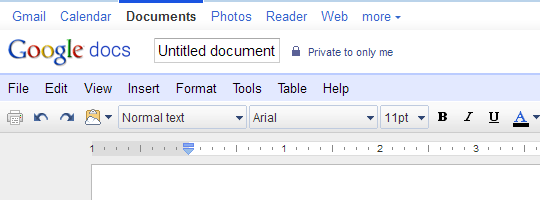
The interface tries hard to make any office user (Microsoft or alternative either) feel at home. Familiar layout, more or less familiar menus and buttons. And it is in your browser – the future is here?
Strong features
Service tries hard and thorough to be very easy to use. It is obvious that rather than dumb copying there had been a lot of effort spent to copy intelligently. Every feature and every button that feels familiar at the same times make you think – hey, this is easier than usual.
Being part of Google ecosystem is also nothing to sneeze at. Couple clicks and file is shared with other accounts, update details are emailed out and maybe someone even drops in real time to poke a document in parallel with you.
Downsides
The problem is – office suite without office suite is a little too good to be true.
It works like crap in Opera. Not uncommon for Google stuff, yet I seriously challenge the idea of something being web page if it doesn’t work in arbitrary modern browser. I don’t want to give a damn about browser wars and politics. If I open web page I expect it to work.
The polish and ease of features only obscure for a short time that there aren’t that many features that made it. It is only a common ones. Everyone expects to type text in the document, few expect some highly obscure and complex formula to work in it. Latter should not expect that from Docs.
Document managing is a mess. I might be tech dinosaur, but documents are files for me and files are… well – files. Google tries hard to slap some modern fancy tags/collection labels on documents. As I remember it’s not the first set of labels they tried and I fully expect it to fail and be replaced with yet another take. Oh and since they are trying hard not to be files – your options to get local copy are almost entirely developed by third parties because Google couldn’t care less.
One of more discouraging aspects – other people are not guaranteed to be Docs-happy. Send someone Excel file and he will figure out what to do with it without question. Share document in Docs to someone and it can be met with chilled what-the-heck-not-interested-to-figure-this-out attitude.
Overall
Google Docs seem like great stuff and work like a charm most of the time. Its problem is that office suite does not seamlessly transfer to web. You get good thing, but it’s not the thing that got you lured in.
Do you use Google Docs or any other web-based office suite? What are your experiences with such?
jasray #
Rarst #
Eric Mann #
Rarst #
The DataRat #
The DataRat #
Panos #